Garden Studios Essex
Garden Studios in Essex
Creative work needs space that tolerates mess, holds work in progress and has light you can rely on. A garden studio gives you that without the compromises of a spare room.
We build studios for painting, ceramics, photography, music, writing, sewing and general hobby work — each one specified around the demands of the discipline rather than a generic layout.
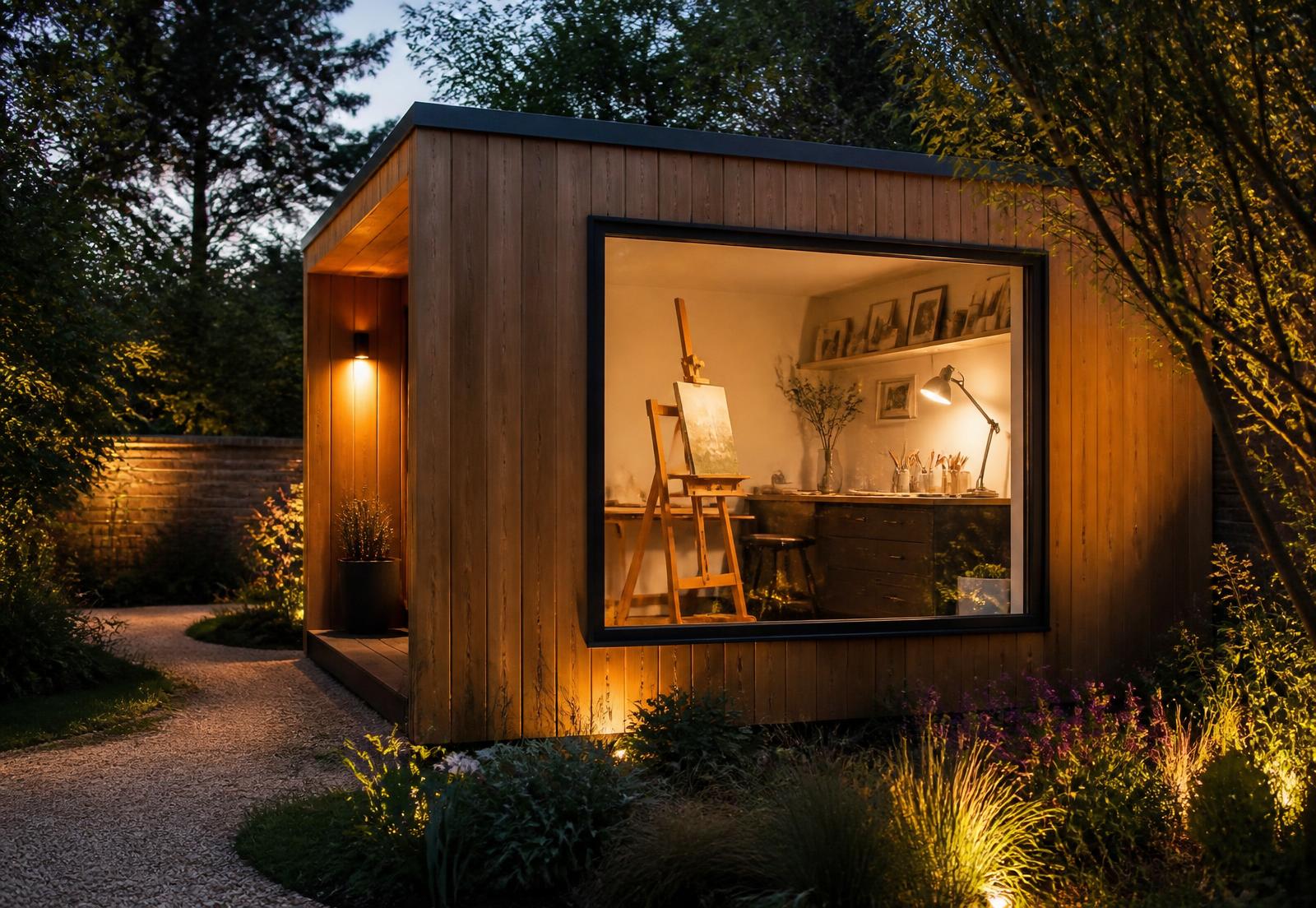
Natural Light and Glazing
Light is the first design decision. Some studios want large, even daylight and minimal direct sun; others need controllable darkness. Window size, position, orientation and any rooflights are chosen around the work you do, and blinds or shading are considered at the same time.
Sound and Separation
For music practice and recording, construction detailing, glazing specification and how the building sits within the garden all influence how much sound reaches the house and neighbouring properties. We explain what level of reduction is realistic rather than promising a soundproof box.
Storage, Surfaces and Layout
Studios fill up. Planning deep storage, worktops at the right height, wall space for pinning or hanging work, and a clear circulation route keeps the room usable long after the first month.
- Worktop and bench positions
- Deep and shallow storage for materials
- Wall space for work in progress
- Durable, cleanable flooring
- Task lighting over work areas
- Power provision for tools and equipment
Year-Round Use
Insulation, double glazing, heating and ventilation matter more in a studio than most people expect: materials, instruments and finished work all suffer in a damp, cold or overheated space.
Garden Studio Costs
Glazing extent, any acoustic detailing, internal joinery and the electrical specification are the main cost drivers for studios. Our Essex pricing guide sets out how each element affects the total.
Related
Plan Your Garden Room
Everything you need to move from an idea to an itemised quotation.
Evidence
Related Projects
Projects coming soon
Completed garden room case studies will be published here, each with photographs, dimensions, full specification and the customer brief behind the build.
FAQs
Frequently Asked Questions
- What is the best orientation for an art studio?
- North light is traditionally preferred for painting because it is consistent and avoids direct sun moving across the work. That said, orientation is only one factor — rooflights, glazing size and blinds all affect the result, and your garden may limit the options.
- Can a garden studio be soundproofed?
- Sound transfer can be reduced significantly through construction choices, glazing specification and careful detailing, which matters for music practice and recording. Complete soundproofing is not a realistic claim for any garden building, so we discuss what level of reduction is achievable for your brief.
- Is a garden studio suitable for photography?
- Yes. Controllable light is the key requirement: large glazing for natural light, blinds or blackout where needed, and a lighting scheme with consistent colour temperature for when daylight is not enough.
- Can I run a business from a garden studio?
- Many home-based creative businesses operate from a garden studio. Where customers visit regularly, there may be planning considerations, and we recommend checking with your local Essex planning authority.
- What flooring works in a studio?
- It depends on the work. Durable vinyl or engineered timber suits general creative use, while ceramics, printmaking or workshop use points towards something more robust and easily cleaned.
Ready to Create More Space at Home?
Tell us about your garden, how you would like to use the room and any sizes you have in mind. We will talk through the options and prepare a clear, itemised quotation.